TROG’s Facility Alliance Members (FAM) are the cornerstone of our collaborative outreach, supporting the implementation and delivery of TROG trials.
In this series, we feature some of the many facilities that play a key role in advancing TROG trials, enabling us to recruit participants from diverse backgrounds.
SITE NAME:
Radiation Oncology Network, Western Sydney Local Health District.
TROG TRIALS:
Previous and current trials conducted by the facility include:
- TROG 07.01 DCIS
- TROG 12.02 PET LABRADOR
- TROG 16.02 Local HER-0
- TROG 17.02 OUTRUN
- TROG 17.03 LARK
- TROG 18.01 NINJA
- TROG 20.01 CHEST RT
- TROG 21.07 SOCRATES HCC.
Why is it important to your site to be involved in clinical trials?
For a department with our capabilities, trial involvement is part of how we realise the value of what we have. We hold a modern LINAC platform, brachytherapy, an MR simulator, and affiliated radiobiology lab – infrastructure that reaches its full potential only when it is used to ask and answer questions, not simply to deliver established protocols.
“Trials are how we turn capability into contribution towards better patient outcomes for all.”
Being trial-active also keeps our own standards high. The protocol adherence, careful contouring, planning QA, and disciplined follow-up that clinical trials demand carry over into everything else we do, so our non-trial patients benefit from the same rigour. It keeps our clinicians, physicists and radiation therapists current, and it shows our trainees how research is embedded in clinical practice.
Most importantly, it matters for our patients. Participation offers earlier access to techniques and combinations with novel systemic therapy, and it lets us help shape the evidence around questions relevant to our own population rather than only importing answers generated elsewhere. With a radiobiology lab on site, we are positioned to pursue translational work that few clinical departments can – and our University of Sydney partnership, academic standing, and ability to attract good people all rest on staying research-active.
What makes your centre special, or are you most proud of?
We are fortunate to have an unusually complete set of capabilities under one roof. Alongside providing the full gamut of advanced LINAC techniques such as SRS and SBRT, we have a very active brachytherapy program and an MR simulator that supports high-quality soft-tissue definition, servicing both adult and paediatric patients.
We also have an on-site radiobiology laboratory within the Westmead Institute of Medical Research which is less common – and that is perhaps what we are most proud of. The proximity of bench and bedside lets us pursue translational questions other clinical departments may not be able to. For example, our patients participating in preoperative SRS trials and subsequent resection of brain metastases, will have the excised metastases tissue analysed at the radiobiology lab to give us further radiobiology insight.
Our university affiliation and collaboration also allows us to participate in clinical trials at the forefront of radiation physics research, e.g. novel MRI sequences to guide SBRT to prostate and liver, or novel image guidance technique that helps track the movement of the tumour during radiotherapy . It is the combination – advanced delivery technology, MR-guided planning, brachytherapy expertise, and genuine laboratory science – that lets us take part in trials across the full spectrum, from early translational work through to large multicentre studies.
What helps your centre to manage the demands of research alongside providing clinical services for patients – what are your tips for other sites?
Research and service can compete for the same people and the same machine time. A few things have helped us:
- Protect dedicated research time and roles rather than relying on goodwill. For example, our Radiation Oncology Fellows have half of their time dedicated to research.
- A clinical trials coordinator or research nurse who owns screening, consent logistics, data and follow-up is the single highest-yield investment – it keeps the clinical team clinical and stops trials from silently slipping.
- Build eligibility screening into routine clinic flow. The question: ‘Is there a trial for this patient?’ is asked by default at multidisciplinary team (MDT) meetings and at first consult. There’s a risk that recruitment can stop depending on which clinician happens to remember. So our clinical trial coordinators are either present at MDT meetings, or actively screen the MDT list of patients against trial eligibility.
- We periodically review our portfolio and review why certain trials are not accruing well and develop strategies to deal with that.
- Invest in QA and physics capacity. Credentialling, planning, and dosimetry QA for SRS/SBRT and MR-guided trials are front-loaded and easy to underestimate; resourcing them properly is what lets the clinical service absorb trial work without disruption.
- Finally, make the whole team feel ownership. Radiation therapists, physicists, nurses and administrators all carry part of every trial, and recognising that visibly is what sustains the effort over years rather than months.
Thanks to A/Prof Tim Wang for sharing this overview of the facility.
Related Post
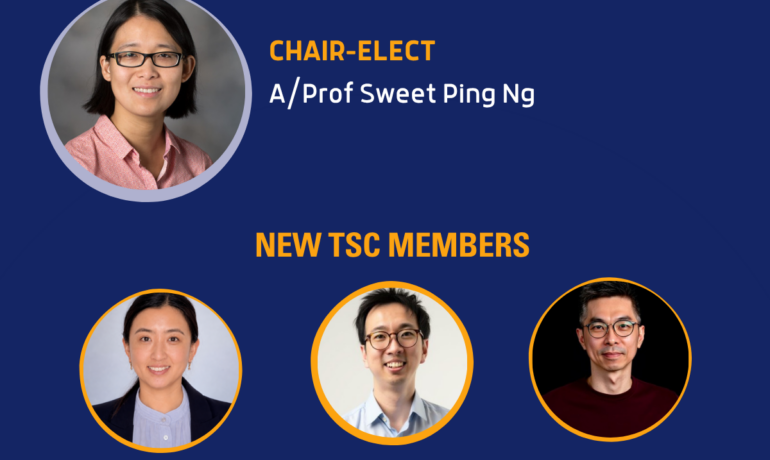
New TROG Scientific Committee Chair-Elect and members bring diverse experience
LATEST NEWS: 21 July 2026 The TROG Scientific Committee
Reclaiming power: a radiation oncologist’s moving story
TROG MEMBER STORY: 14 July 2026 Dominique Lee’s horrific