

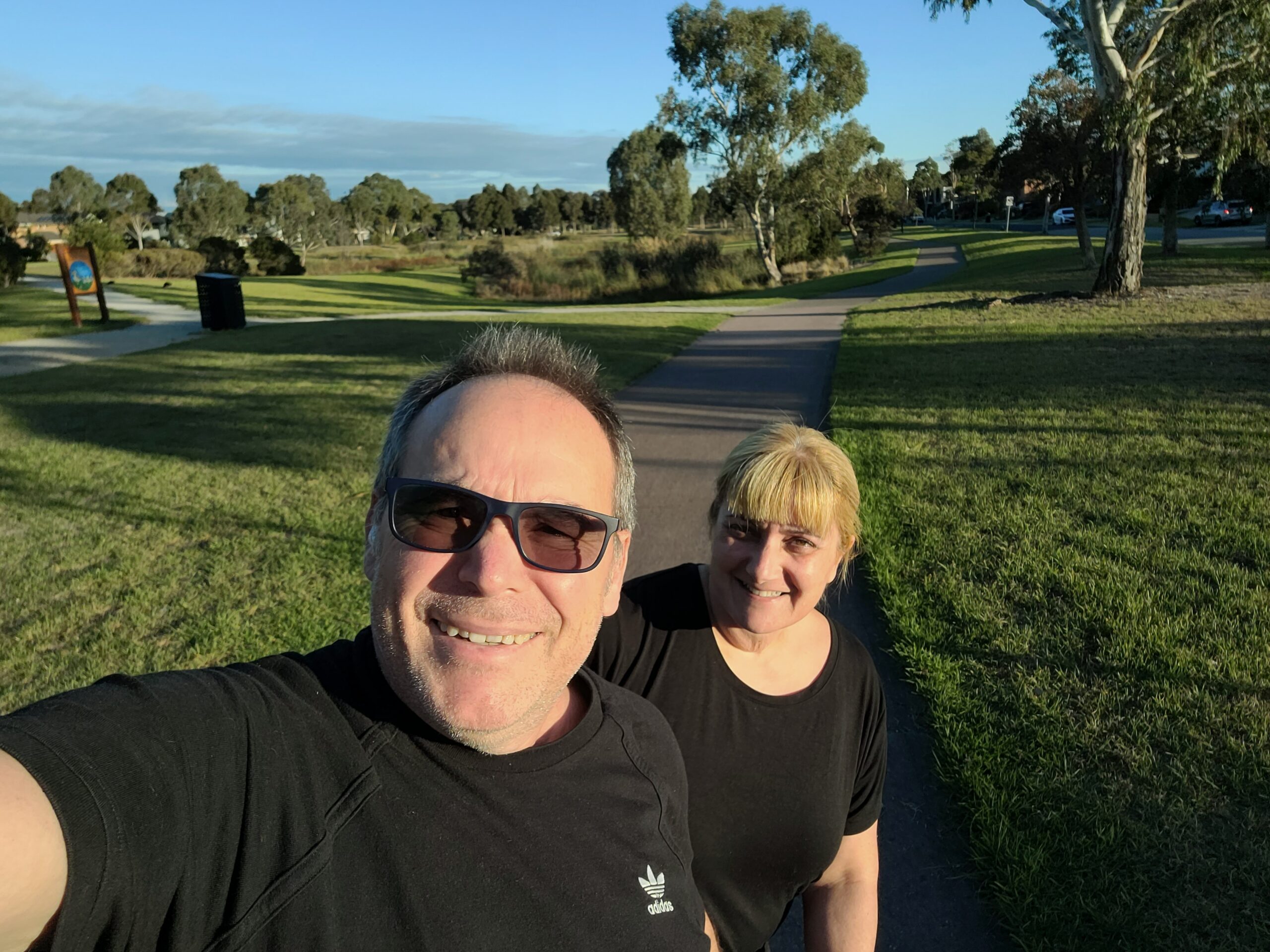
Angelo Zuccarello
Melbourne, Victoria
Angelo Zuccarello took part in the TROG 15.03/ANZUP 16001 FASTRACK II trial, which showed that a rapidly emerging radiation therapy technique could provide a new treatment option for kidney cancer.
It was just before Christmas in 2019 that a CT scan to investigate other health issues revealed a mass in Angelo Zuccarello’s kidney.
Angelo, who was just 55-years-old at the time, said he was fortunate that his kidney cancer was caught early. However, surgery wasn’t recommended as he had heart problems and diabetes.
Instead, his kidney specialist suggested he might be eligible to take part in a clinical trial to investigate a new radiation therapy treatment for kidney cancer.
Known as the FASTRACK II trial, the study run by TROG Cancer Research, was investigating if a highly-targeted radiation therapy technique called Stereotactic Ablative Body Radiation Therapy (SABR) could provide a new treatment option for patients with large primary kidney tumours that were unsuitable for surgery.
In the trial, patients underwent either a single session of SABR, or three sessions delivered 48 hours apart, depending on the size of their tumour. The SABR therapy doesn’t require any anaesthetic and is not invasive.
Angelo consulted FASTRACK II trial Chief Investigator, Prof Shankar Siva, a Radiation Oncologist from Peter MacCallum Cancer Centre in Melbourne, who invited him to take part in the trial.
“I was scared enough about the cancer, so I was happy not to have to have surgery,” he says.
“The trial was fully explained and I thought, ‘why not?’. I was very happy to go in the trial.”
Angelo needed just one session of SABR, and was able to start a new job soon afterwards.
Over the past five years he’s undergone regular scans, which show his kidney mass has decreased in size and no longer presents as cancerous.
“I feel very lucky to be in the trial. You have to give it a chance,” he says.
He adds that he is pleased other people with kidney cancer may now have a new treatment option as a result of the study.
Angelo is far from alone in his diagnosis. Kidney cancer incidence is increasing, with around 4,800 cancers diagnosed and 1,000 deaths in Australia in 2025.

But new findings from the FASTRACK II study show no patient had a tumour recurrence in the treated kidney (100% local control) and no patient died from their cancer (100% cancer specific survival), after the. 70 trial participants were followed-up closely for five years after treatment. The study outcomes were published in the esteemed journal, Lancet Oncology, in May 2026.
Prof Siva says the FASTRACK II trial results are very promising.
“I would like to thank the research team, and the many patients who took part in the FASTRACK II trial, helping to pave the way for improved cancer treatments for the future,” he says.
The next step in researching the new therapy will be to conduct further randomised trials to compare it to other treatment approaches such as surgery, he says.
Photo caption: Angelo Zuccarello, with his wife Rosie.
- Read more about the FASTRACK II trial
- Support cancer research through a donation, or by running your own fundraising event.
Related Post